• About
  • Daily Market Update

Landis Refining Industry News

~ Keeping up with all things Dental and Metal

Landis Refining Industry News

Author Archives: landisrefining

Studies Uncover More Links Between Periodontitis and Cancer

17 Wednesday Jan 2018

Posted by landisrefining in scrap gold

≈ Leave a comment

82cdc4575b4cb55c0f3c0b126c5d7873_XL

Photo courtesy of Dentistry Today

As researchers continue to probe the links between oral and systemic health, independent studies in Europe and the United States underscore the potential connections between periodontitis and various forms of cancer, with a particular look at how oral bacteria may trigger onset of the disease.

Bacteria and Cancer

Researchers at the University of Helsinki, the Helsinki University Hospital, and the Karolinska Institutet have investigated the role of bacteria that cause periodontitis in developing oral and certain other cancers as well as the link between periodontitis and cancer mortality on the population level.

Their work has proven for the first time, the researchers said, the existence of a mechanism on the molecular level through which Treponema denticola (Td) also may have an effect on the onset of cancer. The primary virulence factor of Td, the Td-CTLP proteinase, also occurs in malignant tumors in the gastrointestinal tract such as pancreatic cancer.

The CTLP enzyme can activate the enzymes that cancer cells use to invade healthy tissue (pro-MMP-8 and pro-MMP-9). At the same time, CTLP also diminishes the effectiveness of the immune system by, for example, inactivating molecules known as enzyme inhibitors.

In another study, the researchers proved on the population level that periodontitis is linked with cancer mortality, with an especially strong link to mortality caused by pancreatic cancer. Some 70,000 Finns took part in the this 10-year follow-up study.

“These studies have demonstrated for the first time that the virulence factors of the central pathogenic bacteria underlying gum disease are able to spread from the mouth to other parts of the body, most likely in conjunction with the bacteria, and take part in central mechanisms of tissue destruction related to cancer,” said Timo Sorsa, a professor at the University of Helsinki.

The researchers concluded that a low-grade systemic inflammation related to periodontitis facilitates the spread of oral bacteria and their virulence factors to other parts of the body. They noted that the prevention and early diagnosis of periodontitis are very important for patients’ oral health and their overall wellbeing.

“In the long run, this is extremely cost-effective for society,” Sorsa said.

Read more via Studies Uncover More Links Between Periodontitis and Cancer | Dentistry Today

Follow us on instagram

Like us on facebook

Visit us at LandisRefining.com

Beyond the Bitcoin Bubble

17 Wednesday Jan 2018

Posted by landisrefining in scrap gold

≈ Leave a comment

bitcoin

photo courtesy of hackernoon.com

The sequence of words is meaningless: a random array strung together by an algorithm let loose in an English dictionary. What makes them valuable is that they’ve been generated exclusively for me, by a software tool called MetaMask. In the lingo of cryptography, they’re known as my seed phrase. They might read like an incoherent stream of consciousness, but these words can be transformed into a key that unlocks a digital bank account, or even an online identity. It just takes a few more steps.

On the screen, I’m instructed to keep my seed phrase secure: Write it down, or keep it in a secure place on your computer. I scribble the 12 words onto a notepad, click a button and my seed phrase is transformed into a string of 64 seemingly patternless characters:

1b0be2162cedb2744d016943bb14e71de6af95a63af3790d6b41b1e719dc5c66

This is what’s called a “private key” in the world of cryptography: a way of proving identity, in the same, limited way that real-world keys attest to your identity when you unlock your front door. My seed phrase will generate that exact sequence of characters every time, but there’s no known way to reverse-engineer the original phrase from the key, which is why it is so important to keep the seed phrase in a safe location.

That private key number is then run through two additional transformations, creating a new string:

0x6c2ecd6388c550e8d99ada34a1cd55bedd052ad9

That string is my address on the Ethereum blockchain.

Ethereum belongs to the same family as the cryptocurrency Bitcoin, whose value has increased more than 1,000 percent in just the past year. Ethereum has its own currencies, most notably Ether, but the platform has a wider scope than just money. You can think of my Ethereum address as having elements of a bank account, an email address and a Social Security number. For now, it exists only on my computer as an inert string of nonsense, but the second I try to perform any kind of transaction — say, contributing to a crowdfunding campaign or voting in an online referendum — that address is broadcast out to an improvised worldwide network of computers that tries to verify the transaction. The results of that verification are then broadcast to the wider network again, where more machines enter into a kind of competition to perform complex mathematical calculations, the winner of which gets to record that transaction in the single, canonical record of every transaction ever made in the history of Ethereum. Because those transactions are registered in a sequence of “blocks” of data, that record is called the blockchain.

Read more via Beyond the Bitcoin Bubble – The New York Times

Follow us on Instagram

Like us on Facebook

Lalaounis Continues to Create ‘Jewelry With a Soul’ – The New York Times

12 Friday Jan 2018

Posted by landisrefining in scrap gold

≈ Leave a comment

ATHENS — Family lore has it that when the hospital discharged each of Ilias Lalaounis’s four daughters after their births, the first place their father took them was not home but to his jewelry workshop, an intricate labyrinth of studios and staircases in the shadow of the Acropolis.

“My dad said it was to get the smell of the workshop,” his third daughter, Maria Lalaounis, said with a laugh. “He wanted to make sure it was in our DNA and in our senses.”

Lalaounis — a fourth-generation jeweler who died at 93 in 2013 — was one of the most celebrated jewelers in Greece during the last century. He was a prolific artist and consummate marketer who revitalized the country’s industry in the 1960s and 1970s while introducing his own creations to a global audience.

Today, almost 50 years since their father founded the company in 1969, the four sisters still control the business, each taking responsibility for different aspects. (And all still use their father’s surname.)

Aikaterini, 58, is the director of retail and public relations in Greece. Demetra, 54, is the chief executive of the international business. Maria, 53, is the chief executive of the Greek business and the brand’s creative director. And Ioanna, 50, is director and curator in chief of the Ilias Lalaounis Jewelry Museum, which her parents founded in 1993 on the site of his original workshop. With the exception of Demetra, who lives in London, the sisters all live in Athens.

Photo

Jewelry by Ilias Lalaounis, inspired by Greek history, on display at the family museum.CreditEirini Vourloumis for The New York Times

Trying to escape an unseasonal heat wave that gripped the city in September, the sisters gathered in the museum’s cool interior to discuss how they continue to build on their father’s legacy, as well as adapting the business to both contemporary tastes and economic realities.

Read more via Lalaounis Continues to Create ‘Jewelry With a Soul’ – The New York Times

Follow us on instagram

Like us on facebook

Tap Uninsured Patients and Dental Membership Plans for Growth and Profitability

12 Friday Jan 2018

Posted by landisrefining in scrap gold

≈ Leave a comment

Topic Center: Patient RelationshipsMost dentists think the biggest hurdle to growth and profitability is increasing the number of new patients. This is misguided for two reasons. First, new patient acquisition is very costly, time consuming, and difficult. Most efforts do not pay dividends. Second, the largest growth opportunity is right in front of their eyes. It is their existing, uninsured patients who come in their door every day.
This group has millions of dollars of untreated dentistry in their patient charts right now. The key is unlocking that potential by moving them from a pay-as-you-go model to a subscription model. In doing so, dentists can increase treatment acceptance and revenue by 50% and double the value of their practice.

Options for Patients

Your uninsured patients know that dental health is critical to their overall health. Unfortunately, many of these patients avoid dental visits and decline recommended treatment due to cost, fear of cost, and a lack of coverage. The good news is that 89% of these uninsured patients are interested in purchasing a dental care plan, but believe dental insurance is too expensive and complex, according to market research conducted by Finch Brands for Kleer. In fact, only 7% of uninsured consumers purchase dental insurance if it is not subsidized by their employer, reports the National Association of Dental Plans State of the Dental Benefits Market 2015 report.

So how do you take advantage of this huge opportunity while providing your uninsured patients with the care they want? Membership plans are the answer. Membership plans are dental care plans offered by dentists directly to their patients. Patients pay a monthly or annual subscription directly to their dentist for preventive care and discounts off all other treatment.

These plans are vastly different from dental insurance and discount dental plans because dentists are in control. Dentists design plans to work best for their practice, including setting the subscription price and fee schedule. Patients make payments directly to their dentist, avoiding the cost, hassles, and overhead of a third party.

Uninsured patients skip dental visits and avoid treatment because they don’t have coverage. As a result, they aren’t getting the treatment they want and need. Also, they don’t purchase dental insurance due to cost and complexity. This is where membership plans come in. Membership plans create a “membership club effect,” mitigating fear and giving patients peace of mind. These patients feel protected by the coverage that membership plans provide, so they visit more often and accept more treatment.

We recently conducted research and found that on average, uninsured patients who are on a membership plan accept 55% more treatment in a year than uninsured patients who are not on a plan. The same research also showed that a typical dental office can double the value of its practice by converting its uninsured patient base to membership plans.

Read more via Tap Uninsured Patients and Dental Membership Plans for Growth and Profitability | Dentistry Today

Follow us on instagram

Like us on facebook

Palladium enjoys hot streak and leaves platinum for dust

15 Friday Dec 2017

Posted by landisrefining in scrap gold

≈ Leave a comment

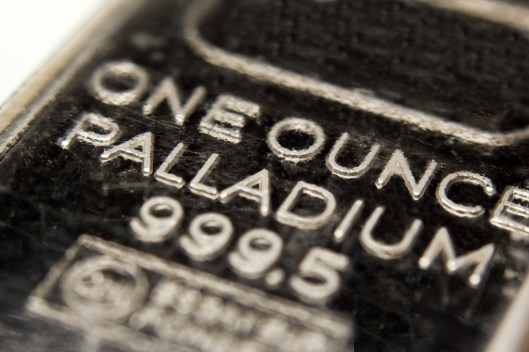
Palladium barPlease use the sharing tools found via the email icon at the top of articles. Copying articles to share with others is a breach of FT.com T&Cs and Copyright Policy. Email licensing@ft.com to buy additional rights. Subscribers may share up to 10 or 20 articles per month using the gift article service. More information can be found here.

https://www.ft.com/content/3f604f4a-501a-11e7-bfb8-997009366969

For all the excitement around Tesla Motors and the growth prospects of electric cars, the best performing commodity of 2017 has its fortunes tied to the internal combustion engine. Palladium, a metal used to curb harmful fumes produced by gasoline vehicles, has risen by almost a third this year, outpacing all other metals and raw materials in the Bloomberg Commodity Index. The silvery white material, produced mainly from mines in South Africa and Russia, is benefiting from a shift in sentiment and bets that consumers will switch from diesel to gasoline cars because of concerns over emissions. Speculative wagers on palladium have almost tripled in the past six months as investors have piled into the commodity, pushing it close to price parity with sister metal platinum for the first time in almost two decades.

Read more via Palladium enjoys hot streak and leaves platinum for dust

follow us on Instagram like us on Facebook

Throwing It All Away

08 Friday Dec 2017

Posted by landisrefining in scrap gold

≈ Leave a comment

garbage 10 Nov 2017  Paul Feuerstein, DMD

 Technology Today
 439 times

As you go through the drawers and boxes, you bring back old memories and (unfortunately) think…that you can’t just throw things out since you might use them again….

This year has been a busy one, with many new and novel product introductions—and there are more coming in the next few months for even further tech overload. This column has been more product specific than usual; this time, we should reflect a little on what we are really seeing and what we really need. Every practicing dentist has an area in the office or home with stacks of boxes full of things that were used for a while and then forgotten about—or the enthusiasm for them was lost.

First there was the bottom drawer full of old instruments or some odd restorative material that you used for a while and someday might need to use again. Then it was 2 drawers, then the back of every drawer, and then an unused corner of a room that will someday become an extra treatment room. The big realization comes when you decide to move the office. As you go through the drawers and boxes, you bring back old memories and (unfortunately) think once again that you can’t just throw things out since you might use them again; they were just temporality lost. There is an old George Carlin routine on relating to your “stuff” as well as one I always cherished about things you find in your refrigerator. (If you are too young to remember these routines, they are worth a YouTube search.)

What am I getting at? I have moved 3 times from my original office. The first 2 times were for upsizing and the latest was for downsizing. During my first move, I did something brilliant: I put some “stuff” in boxes and labeled them “if you don’t open this box by January 1, do not open and throw it out.” Of course, when I moved the second time, those sealed boxes came with me. Moving to my next, larger office meant that I could bring all of my original boxes in addition to everything I have accumulated because there was a spare room. To get to the point, I had to downsize during my most recent (or my last?) move. This meant taking a careful inventory of those boxes containing my tech accumulations.

The first boxes held old computer parts: spare CPU fans, extra video cards, a few hard drives, cables galore, and all sorts of parts I had scavenged from failed computers. There were smaller monitors that were in working condition but had been replaced by larger ones. (I actually did properly dispose of the very heavy and bulky 17-inch CRT monitors earlier on.) Now for a word of advice—you must properly dispose of old computers (normally for a fee), but most importantly, you must wipe all of the data from old hard drives and backups. This goes beyond just erasing or reformatting the drives. There is a lot of personal patient information on those drives and, as you know, this is the real crux of HIPAA. Programs such as DBAN or other data “erasers” are available. There are also services that will totally erase hard drives for you, and some even give you a certificate of authenticity much like your hazardous waste companies.

Now it’s time for the next step. Since I have a smaller office and have the need to keep everything, why not get a climate-controlled storage unit that I could rent for just a few months? In this case, I will then, of course, spend a weekend going through everything. And since I have the new space, why not put all those boxes that said “do not open” in there too? That storage bill is starting to mount up as my spare time is diminishing.

So what has survived? The basic core components to run my high-tech office.


Read more via Throwing It All Away | Dentistry Today

Like us on facebook https://www.facebook.com/LandisRefining/

Palladium: tearing up the market in 2017

08 Friday Dec 2017

Posted by landisrefining in scrap gold

≈ Leave a comment

SONY DSC

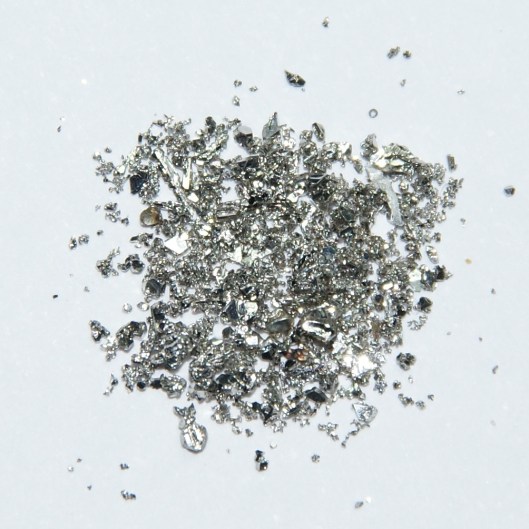
Image courtesy of images-of-elements.com

Gold is having a good year. But not as good as palladium, which has spiked nearly 50% in 2017 to its highest level in over 16 years.

The price of palladium, which is used in cars, electronics, dentistry and jewelry, hit $1,005 per ounce on Monday. Analysts say it’s a case of strong demand and tight supply.

“We are convinced that palladium’s strength is driven by fundamentals,” said Joni Teves, a strategist at UBS.

Teves said that there’s been a consistent shortfall of palladium over the past five years, and demand for the metal continues to be strong — particularly in Asia.

UBS data show that 78% of palladium demand this year came from the auto market. The material is used in exhaust parts to turn dangerous pollutants into less harmful emissions like carbon dioxide.

Strong sales of gasoline-powered cars in the U.S. and China have helped drive demand for the metal.

Read more via Palladium: This metal is tearing up the market in 2017 – Oct. 16, 2017

You can also keep up to date with us on our facebook page https://www.facebook.com/LandisRefining/

The Lure of a Better Life, Amid Cold and Darkness

06 Wednesday Dec 2017

Posted by landisrefining in scrap gold

≈ Leave a comment

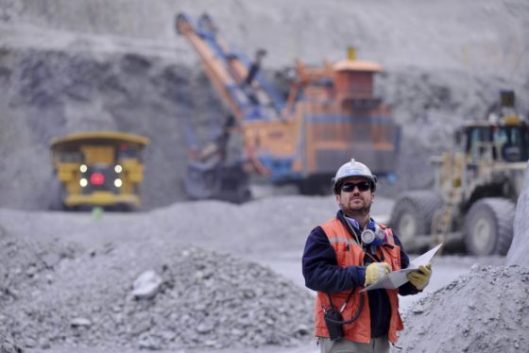
NORILSK, Russia — Blessed with a cornucopia of precious metals buried beneath a desert of snow, but so bereft of sunlight that nights in winter never end, Norilsk, 200 miles north of the Arctic Circle, is a place of brutal extremes. It is Russia’s coldest and most polluted industrial city, and its richest — at least when measured by the value of its vast deposits of palladium, a rare mineral used in cellphones that sells for more than $1,000 an ounce.

Norilsk

Moscow

Arctic

Circle

RUSSIA

It is also dark. Starting about now, the sun stops rising, leaving Norilsk shrouded in the perpetual night of polar winter. This year that blackout began last Wednesday.


Built on the bones of slave prison laborers, Norilsk began as an outpost of Stalin’s Gulag, a place so harsh that, according to one estimate, of 650,000 prisoners who were sent here between 1935 and 1956, around 250,000 died from cold, starvation or overwork. But more than 80 years after Norilsk became part of the Gulag Archipelago, nobody really knows exactly how many people labored there in penal servitude or how many died.

The Norilsk camp system, known as Norillag, shut down in 1956, when Nikita Khrushchev began to dismantle the worst excesses of Stalinism. The legacy of repressive control, though, lives on in tight restrictions on access to the city. All foreigners are barred from visiting without a permit from Russia’s Federal Security Service, the post-Soviet successor to the K.G.B.

via The Lure of a Better Life, Amid Cold and Darkness – The New York Times

You can also keep up to date with us on our facebook page https://www.facebook.com/LandisRefining/

Miners Aim ‘Very Sci-Fi’ Drones at Dark, Dangerous Places – WSJ

08 Wednesday Nov 2017

Posted by landisrefining in scrap gold

≈ Leave a comment

drones.jpg

photo courtesy of Drones At Work

JUNDEE, Australia—Hundreds of feet underground here, scientists are experimenting with a technology that could transform how mining companies dig out rocks in dangerous, pitch-black caves: fully autonomous drones.

The drones would fly without any pilot assistance into areas too risky for human miners. Using a rotating laser similar to those on autonomous cars, they would create three-dimensional maps more detailed than what is available now, helping miners excavate more gold and other commodities that might otherwise be missed.

Read more via Miners Aim ‘Very Sci-Fi’ Drones at Dark, Dangerous Places – WSJ

You can also keep up to date with us on our facebook page https://www.facebook.com/LandisRefining/

Oral Bacteria Linked with Atherosclerosis

03 Friday Nov 2017

Posted by landisrefining in scrap gold

≈ Leave a comment

82cdc4575b4cb55c0f3c0b126c5d7873_XL

photo courtesy of Dentistry Today

For a long time, doctors have assumed that the lipids that cause atherosclerosis came from fatty, cholesterol-rich food. Yet researchers at the University of Connecticut (UConn) have found lipids with a chemical signature that doesn’t resemble lipids that come from animals. Instead, they come from the Bacteroidetes family of bacteria, which typically resides in the mouth and gastrointestinal tract.

“I always call them greasy bugs because they make so much lipid. They are constantly shedding tiny blebs of lipids. Looks like bunches of grapes,” said Frank Nichols, DDS, PhD, a UConn Health periodontist who studies the links between gum disease and atherosclerosis.

Bacteroidetes makes distinctive fats. The molecules have unusual fatty acids with branched chains and odd numbers of carbons. Typically, mammals don’t make branched chain fatty acids or fatty acids with odd numbers of carbons. The chemical differences between these bacterial lipids and human lipids result in subtle weight differences between the molecules.

“We used these weight differences and modern mass spectrometers to selectively measure the quantity of the bacterial lipids in human samples to link the lipids to atherosclerosis,” said Xudong Yao, PhD, MS, a UConn associate professor of chemistry who analyzed the lipid samples. “Establishment of such a link is a first step to mark the lipids as indicators for early disease diagnosis.”

The marked chemical differences between Bacteroidetes lipids and the human body’s native lipids may be the reason they cause disease, suggests Nichols. The immune cells that initially stick to the blood vessel walls and collect the lipids recognize them as foreign. These immune cells react to the lipids and set off alarms, inflaming and thickening the blood vessel walls, creating plaques, clogs, and atheromas.

Despite being non-native lipids, the Bacteroidetes lipids could be broken down by an enzyme in the body that processes lipids into the starting material to make inflammation-enhancing molecules. So, the Bacteroideteslipids damage blood vessels in two ways: the immune system sees them as a signal of bacterial invasion, and then enzymes break them down and super-charge the inflammation.

The researchers note that Bacteroidetes is not an invading species, as it usually remains in the oral cavity and in the gastrointestinal tract. If conditions are right, it can cause gum disease but not infect the blood vessels. However, the lipids it produces also pass easily through cell walls and into the bloodstream.

Read more via Oral Bacteria Linked with Atherosclerosis | Dentistry Today

You can also keep up to date with us on our facebook page https://www.facebook.com/LandisRefining/

← Older posts
Newer posts →

Landis

Landis
Follow Landis Refining Industry News on WordPress.com

No Instagram images were found.

Blogroll

  • Landis Refining Company
  • Live Market Metal Prices
  • Sell dental scrap

Landis Facebook

Landis Facebook

Website Powered by WordPress.com.

  • Subscribe Subscribed
    • Landis Refining Industry News
    • Join 36 other subscribers
    • Already have a WordPress.com account? Log in now.
    • Landis Refining Industry News
    • Subscribe Subscribed
    • Sign up
    • Log in
    • Report this content
    • View site in Reader
    • Manage subscriptions
    • Collapse this bar
 

Loading Comments...