Photo by Pixabay on Pexels.com
Gold hit a fresh six-week low on Friday as the dollar firmed after upbeat U.S. economic data supported the Federal Reserve’s resolve for steady interest rate hikes, putting the metal on track for its longest monthly losing streak since January 1997.
Gold was down about 1.6 percent in September, its sixth straight monthly loss.
Spot gold rose 0.9 percent to $1,192.53 an ounce. The metal touched its lowest since Aug. 17 at $1,180.34 an ounce earlier in the session, dipping further from a six-week low of $1,181.61 hit on Thursday.
U.S. gold futures rose 0.7 percent at $1,196.10 an ounce.
The dollar gained against its peers on Friday as data showed U.S. economic growth accelerated in the second quarter at its fastest pace in nearly four years. Another report showed durable goods rose 4.5 percent in August, rebounding from a revised 1.2 percent drop the month before.
The short-term outlook is bearish for gold as the dollar may see some upside due to an ongoing trade war between China and the U.S. and the Federal Reserve interest rate hike outlook, according to Argonaut Securities analyst Helen Lau.
The Fed raised interest rates on Wednesday and said it planned four more increases by the end of 2019 and another in 2020.
“Robust U.S. economic fundamentals despite an escalation in trade tariffs have done little to lift demand for the non-interest bearing asset,” said Benjamin Lu, commodities analyst at Phillip Futures.
“The outlook for gold prices in the current term remains dim as such in lieu of rising rates and yields amidst buoyant U.S. economic conditions.”
Gold is down more than 13 percent from an April high, largely because of the stronger dollar, which has been boosted by a vibrant U.S. economy and fears of a global trade war. Investors have bought the greenback instead of gold as a safe investment.
Meanwhile, President Donald Trump’s accusation of Chinese meddling in the upcoming U.S. elections marks a new phase in an escalating pressure campaign against Beijing that Washington is pursuing on multiple fronts, senior U.S. officials said on Thursday.
“The trade war continues to favour the U.S. dollar and this will generally dampen gold’s upside,” said Nicholas Frappell, global general manager, ABC Bullion, Australia.
“Large speculative shorts may help cushion weakness as punters keep an eye on levels to close out and take money off the table,” he said.
Among other metals, palladium touched a fresh eight-month high at $1,088.97 an ounce. Silver rose 3.4 percent to $14.68 an ounce and platinum was up 0.7 percent to $815.24.

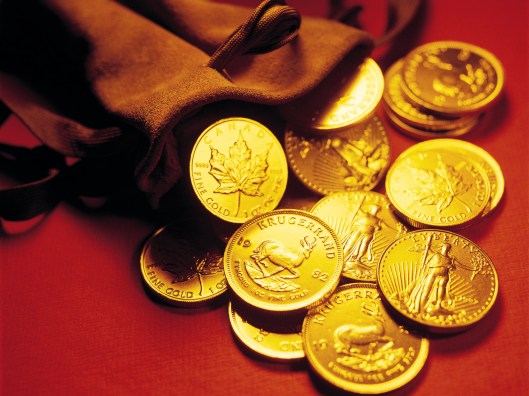 Kitco – Gold prices have pushed into positive territory after inflation pressures have officially hit the Federal Reserve’s target.
 While analysts continue to wait for the ever-elusive short squeeze to breathe new life in the yellow metal, the market’s speculative short side continues to expand hitting new historical record on a weekly basis. Net speculative short positions have increased for seven consecutive weeks.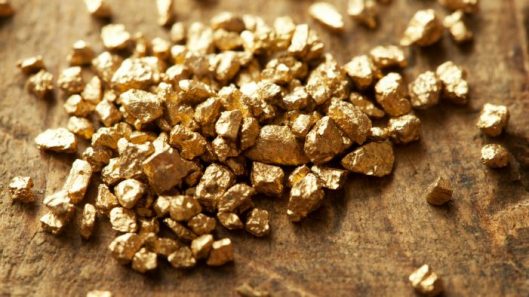
 In trading on Wednesday, precious metals shares were relative laggards, down on the day by about 5.1%. Helping drag down the group were shares of Tanzanian Royalty Exploration (
  If you don’t have
  By Apeksha Nair
BENGALURU, July 13 (Reuters) - Gold prices were muted on
Friday, stuck in a tight trading range, as the dollar extended
rally from the previous session when strong U.S. inflation data
and trade war concerns boosted demand for the greenback.
Spot gold was down 0.1 percent at $1,245.54 an ounce,
as of 0652 GMT. For the week, the metal was down 0.7 percent.
U.S. gold futures for August delivery slipped 0.1
percent to $1,245.50 an ounce.
"The dollar has been a prime mover of gold prices...Market
sentiments have been largely positive on the greenback as
investors pivoted from the safe haven asset despite rising
geopolitical risks," said Benjamin Lu, a commodities analyst at
Singapore-based broker Phillip Futures, in a note.
The dollar was buoyant near a 10-day peak versus a basket of
currencies on Friday, supported by Treasury yields that edged
higher on expectations the U.S. inflation rate will rise.
U.S. consumer price data on Thursday showed a steady buildup
of inflation that could keep the Federal Reserve on a path of
gradual interest rate increases.
A stronger dollar and higher U.S. rates reduce demand for
non-interest bearing gold as the metal becomes more expensive
for holders of other currencies.
Elsewhere, the European Central Bank will keep rates at a
record low for as long as needed to raise inflation, minutes of
the bank's latest meeting showed.
Meanwhile, Most Asian share markets rose on Friday, but
China's markets wobbled as investors braced for the impact of
broadening, tit-for-tat Chinese-U.S tariffs.
The United States and China could reopen talks on trade but
only if Beijing is willing to make significant changes, U.S.
Treasury Secretary Steven Mnuchin said on Thursday.
"The trade war issue is still creating a lot of uncertainty.
If the situation continues and we're not seeing any real
movements in gold prices because of it, we might see prices
actually move lower," said Cameron Alexander, an analyst with
Thomson Reuters-owned metals consultancy GFMS.
By Apeksha Nair
    BENGALURU, July 13 (Reuters) - Gold prices were muted on
Friday, stuck in a tight trading range, as the dollar extended
rally from the previous session when strong U.S. inflation data
and trade war concerns boosted demand for the greenback.
    Spot gold        was down 0.1 percent at $1,245.54 an ounce,
as of 0652 GMT. For the week, the metal was down 0.7 percent.
    U.S. gold futures         for August delivery slipped 0.1
percent to $1,245.50 an ounce.
    "The dollar has been a prime mover of gold prices...Market
sentiments have been largely positive on the greenback as
investors pivoted from the safe haven asset despite rising
geopolitical risks," said Benjamin Lu, a commodities analyst at
Singapore-based broker Phillip Futures, in a note.
    The dollar was buoyant near a 10-day peak versus a basket of
currencies on Friday, supported by Treasury yields that edged
higher on expectations the U.S. inflation rate will rise.
    U.S. consumer price data on Thursday showed a steady buildup
of inflation that could keep the Federal Reserve on a path of
gradual interest rate increases.
    A stronger dollar and higher U.S. rates reduce demand for
non-interest bearing gold as the metal becomes more expensive
for holders of other currencies.
    Elsewhere, the European Central Bank will keep rates at a
record low for as long as needed to raise inflation, minutes of
the bank's latest meeting showed.
    Meanwhile, Most Asian share markets rose on Friday, but
China's markets wobbled as investors braced for the impact of
broadening, tit-for-tat Chinese-U.S tariffs.
    The United States and China could reopen talks on trade but
only if Beijing is willing to make significant changes, U.S.
Treasury Secretary Steven Mnuchin said on Thursday.
    "The trade war issue is still creating a lot of uncertainty.
If the situation continues and we're not seeing any real
movements in gold prices because of it, we might see prices
actually move lower," said Cameron Alexander, an analyst with
Thomson Reuters-owned metals consultancy GFMS. Landis Refining Industry News